新しくなったJLPT Practice
Saya introduces Gaku’s updated JLPT Practice main page, where you can choose your level from N5 to N1 in a calm, welcoming design.
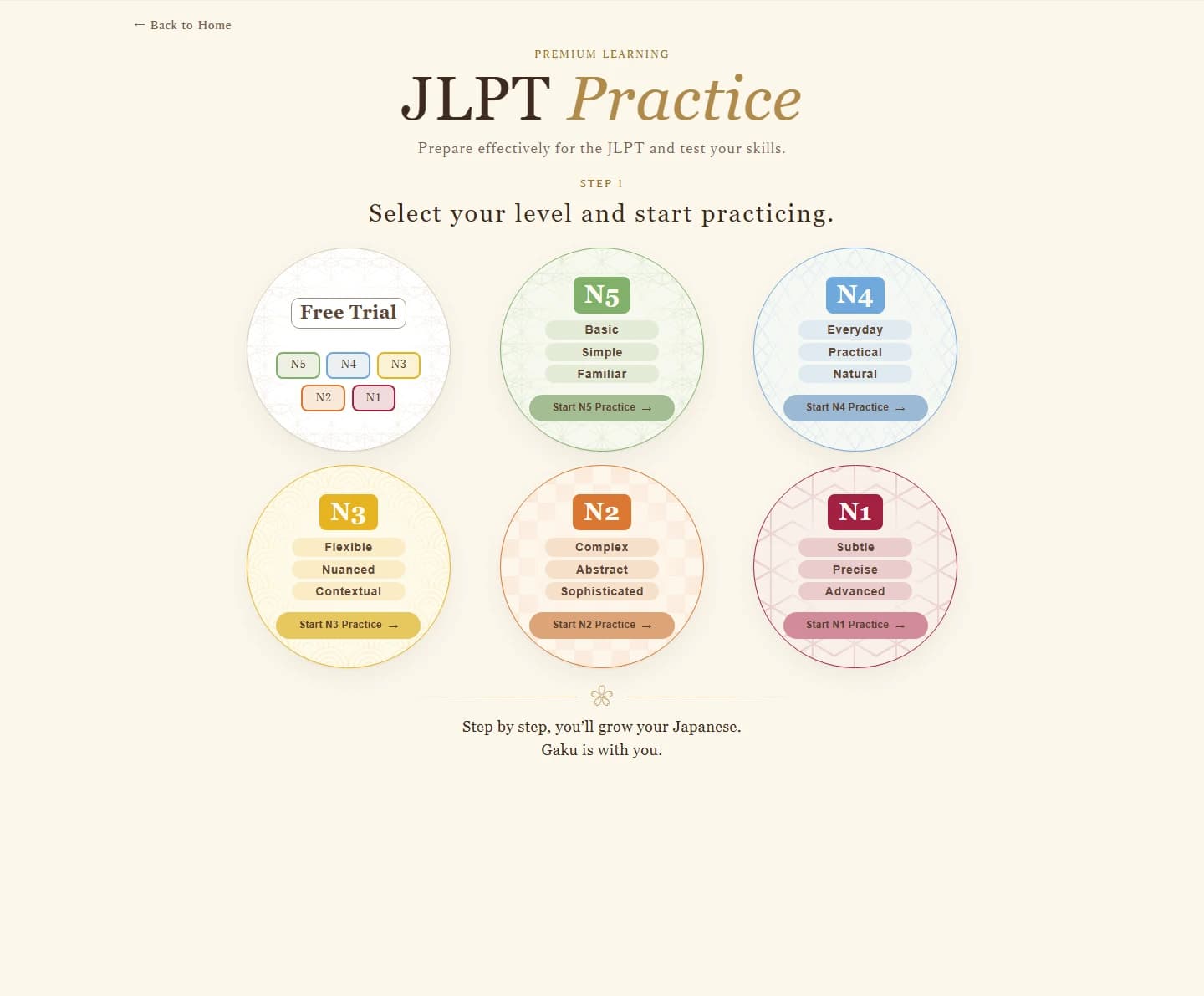
JLPT Practiceのメインページが新しくなりました✨
The JLPT Practice main page has been updated!
N5からN1まで、自分のレベルに合った問題を練習できます。
You can practice questions at your level, from N5 to N1.
上の画像は、レベルを選ぶメインページの画面です。
The screenshot above shows the main page where you choose your level.
レベルごとに色や模様が違います。見るのも楽しいページにしました。
Each level has its own colors and patterns. I wanted the page to be enjoyable to look at too.
やさしい色と、ゆったりしたデザインで、落ち着いて勉強できるようにしました。
The gentle colors and spacious design are meant to help you feel calm while studying.
レベルを選んだ後は、漢字・言葉・文法から、練習したいものを選べます。
After choosing your level, you can select what you want to practice: kanji, vocabulary, or grammar.
例えば、N4を勉強している人は、「N4」から始めてみてくださいね。
For example, if you are studying at N4 level, try starting with “N4.”
無料体験もあるので、まずは少し試してみてくださいね😊
There is a free trial too, so give it a try!
Today's Words
- 問題question; problem
- 文法grammar
- 画面screen; on-screen display
- 模様pattern; design
- 落ち着くto feel calm; to settle down
What You Can Practice
- 「レベルに合った問題」 means “questions suited to your level.” 「〜に合った」 describes something that fits a person, purpose, or situation.
- 「レベルごとに」 means “for each level.” 「〜ごとに」 describes something that applies separately to each member of a group.
- 「選んだ後は」 means “after choosing.” Use a verb in its past form followed by 「後」 to show the order of actions.