Japanese
みずみずしい
An easy Japanese blog explaining みずみずしい, a word used for food that is fresh and full of moisture.
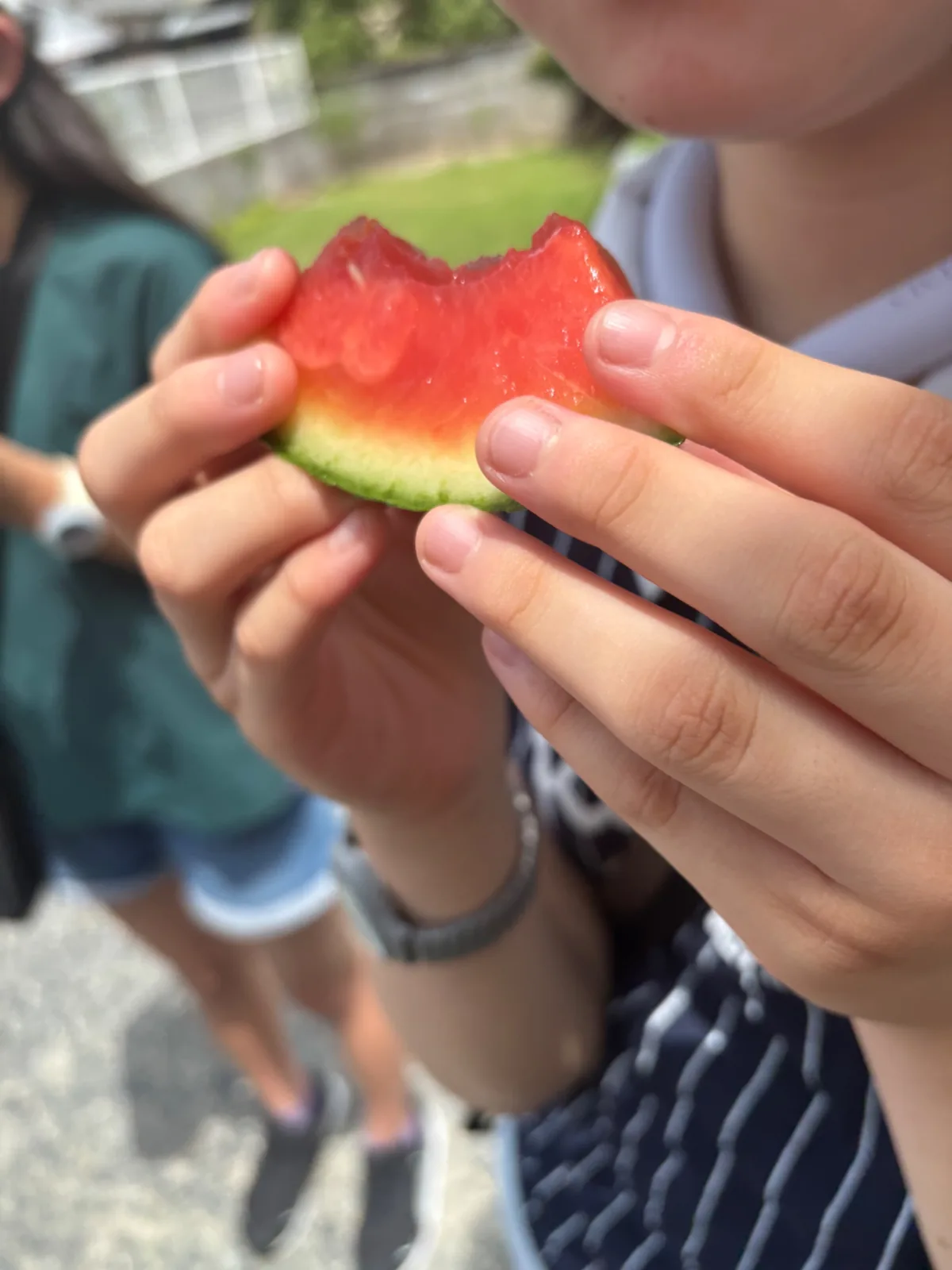
夏といえば、すいかです🍉
Speaking of summer, watermelon is a classic.
みなさんは、「みずみずしい」という言葉を知っていますか?
Do you know the Japanese word mizumizushii?
日本語の「みずみずしい」は、水分が多くて、新鮮なものを表す言葉です。
Mizumizushii is a Japanese word used to describe something that is full of moisture and very fresh.
たとえば、「このすいかは、みずみずしいですね。」と言います。
For example, you can say, “This watermelon is so fresh and juicy.”
すいかだけでなく、「みずみずしいトマト」や「みずみずしいレタス」のようにも使います。
It’s used not only for watermelons, but also for things like fresh, juicy tomatoes and crisp lettuce.
みなさんの国にも、「みずみずしい」と同じような言葉はありますか?
Is there a word like mizumizushii in your language?
「みずみずしい」 is commonly written in hiragana. Break it into three rhythmic parts when reading aloud: 「みず・みず・しい」.
Today's Words
- みずみずしいfresh and full of moisture; juicy
- 水分moisture; water content
- 新鮮fresh
- 表すto express; to describe
- 同じthe same; similar
What You Can Practice
- 「〜といえば」 introduces something strongly associated with a topic: 「夏といえば、すいかです」 means “Speaking of summer, watermelon is a classic.”
- 「〜という言葉」 means “the word called ~” or simply “the word ~.”
- 「〜だけでなく、〜も」 means “not only ~, but also ~.” Here, it shows that 「みずみずしい」 can describe foods besides watermelon.