つるつるとずるずる
Learn how tsurutsuru and zuruzuru describe two different parts of the experience of eating udon in Japanese.
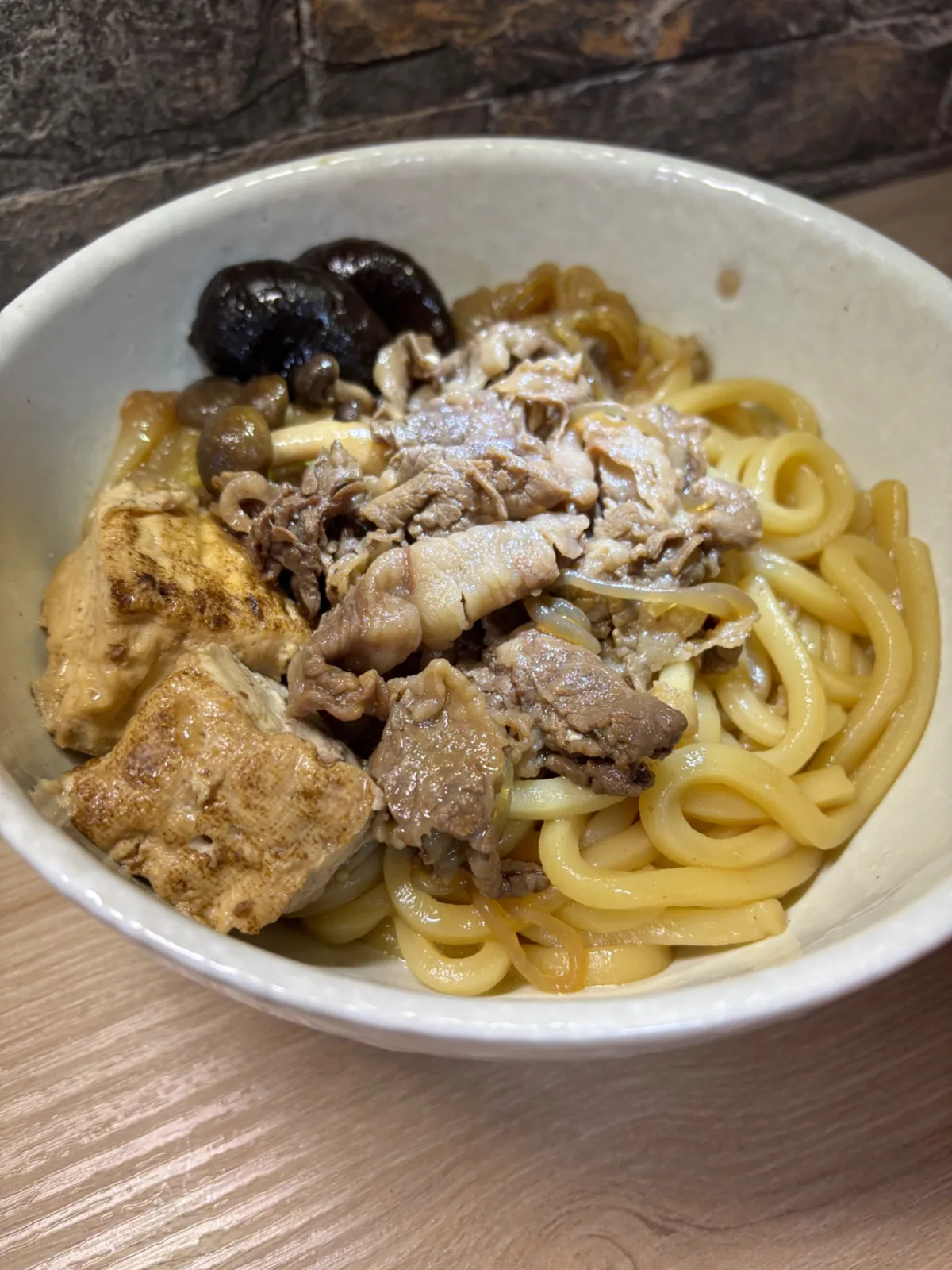
これ は すき焼き うどん です😋
This is sukiyaki udon.
うどん を 食べる とき、「つるつる」 と 言い ます。
When eating udon, we say “tsurutsuru.”
うどん が 口の 中に すべって 入る とき に 使い ます。
It is used when udon smoothly slides into your mouth.
「つるつる、おいしい!」
“Tsurutsuru, delicious!”
「ずるずる」 も うどん を 食べる とき に 使う オノマトペ(おのまとぺ) です。
“Zuruzuru” is also an onomatopoeia used when eating udon.
音を 出して 食べる とき に 使い ます。
It is used when making a slurping sound while eating.
「うどん を ずるずる 食べ ます。」
“I slurp udon.” / “I eat udon with a slurping sound.”
日本で は、音を 出して うどん や そば を 食べても いい です。
In Japan, it is okay to make sounds when eating udon or soba.
「つるつる」 と 「ずるずる」、おもしろい オノマトペ(おのまとぺ) です ね!
“Tsurutsuru” and “zuruzuru”—what interesting onomatopoeia!
Today's Words
- つるつるsmoothly; with a smooth, slippery texture or motion
- ずるずるwith a slurping sound
- すべるto slide; to glide
- 音を出すto make a sound
What You Can Practice
- 「つるつる」 focuses on the noodles’ smooth texture and movement.
- 「ずるずる」 focuses on the audible slurping sound made while eating noodles.
- Japanese onomatopoeia can describe texture, movement, sound, and feeling with a single expressive word.
- What is the difference between つるつる and ずるずる?つるつる describes smooth texture or movement, while ずるずる describes the sound of slurping noodles.
- Can I use つるつる for things other than noodles?Yes. つるつる can describe smooth surfaces, such as smooth skin, polished floors, or slippery objects.